Radio Bulgaria


Author
Darina Grigorova
Metropolitan Gregorios Khoury in a special interview for Radio Bulgaria:
The Antiochian Church supports Bulgarians in UAE praying in Bulgarian
Monday 8 December 2025 16:35
Monday, 8 December 2025, 16:35
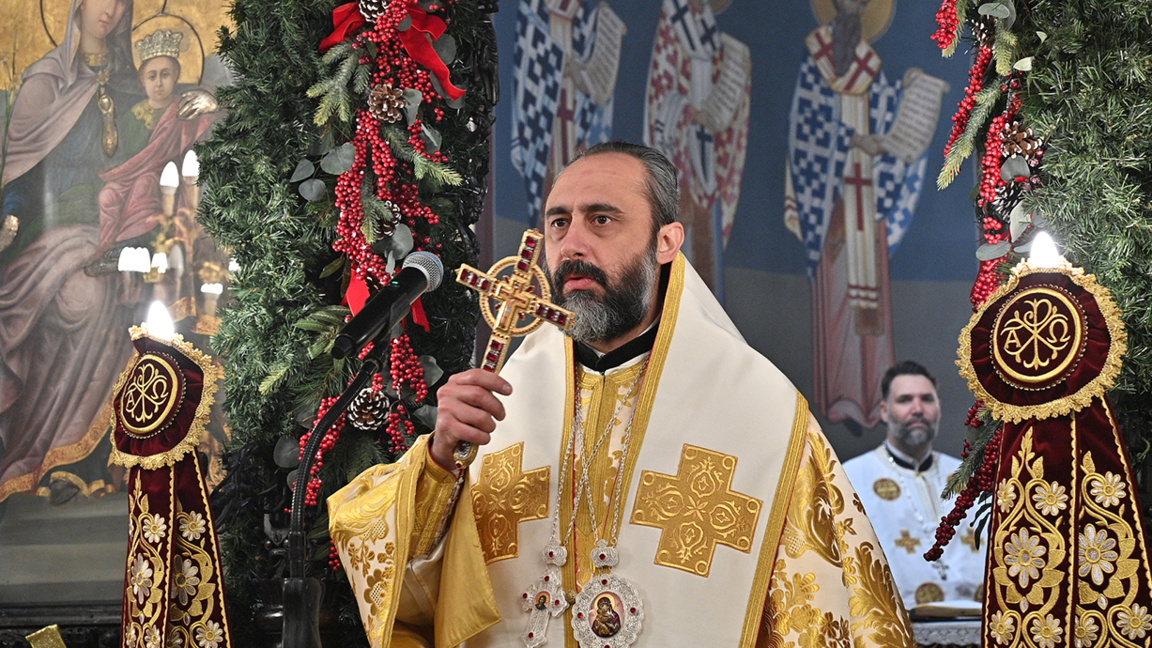
PHOTO Plovdiv Holy Diocese
Font size
One year after the fall of the Assad dynasty, Syria continues to recover from the devastating civil war that forced hundreds of thousands of Syrians to leave their homes. Hope for change and a better life at times gives way to a sense of hopelessness amid destruction…
“In such circumstances, we cannot help all people stay in the country,” noted the Metropolitan of Homs from the Antiochian Church, Gregorios Khoury, in a special interview for Radio Bulgaria, given with the blessing of the Metropolitan of Western and Central Europe, Anthony, and with the assistance of Bulgaria’s Ambassador to the UAE, Ivan Yordanov.
At the beginning of December, His Eminence Gregorios of Homs visited Bulgaria for the second time and spoke about the difficulties and challenges faced by the Christian population in his diocese.
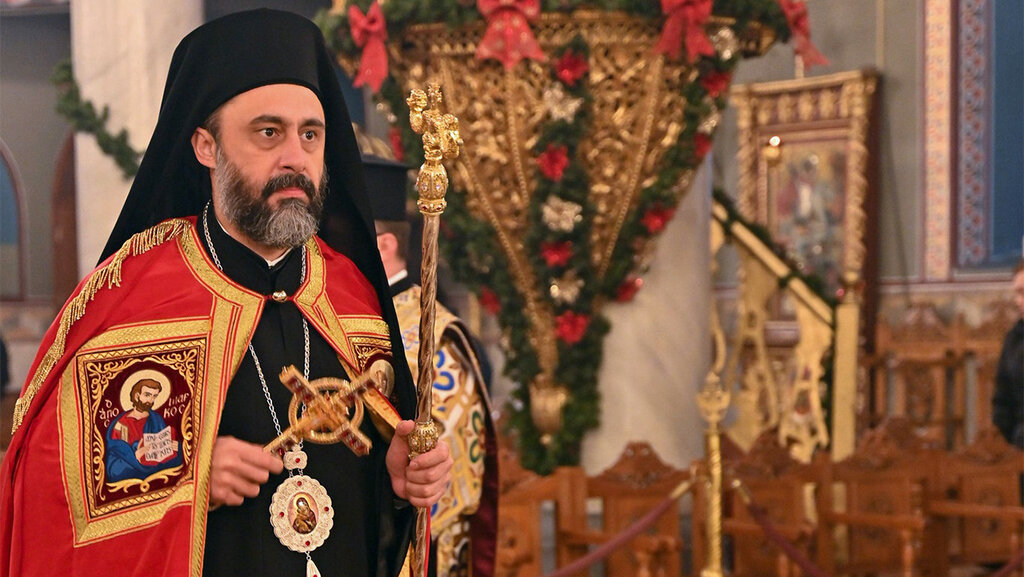
PHOTO Plovdiv Holy Diocese
“We did everything possible to preserve people’s faith, because it is the most important thing that helps a person overcome difficulties until better times come. We believe that our Lord Jesus Christ is in the Church and leads us, because if He were not leading us, we would not have been able to continue.”
After the Church of Jerusalem, the Antiochian Church is the oldest Christian church in the world. It encompasses Syria, Lebanon, Iraq, Kuwait and the countries of the Arabian Peninsula (excluding Jordan). The first bishop of this ancient Church, which endured the most severe persecutions, was the Apostle Peter. Monasticism was born there, and the Antiochian theological school left a rich literary legacy. In the first three centuries of the Christian era, the Antiochian Church was the largest territorially in the Christian world. As a result of the Arab conquest (in 637), the Crusades (11th –13th century), the Mamluks (13th c.) and the Turks (early 16th c.), the Antiochian Orthodox Church lost its grandeur. Bulgaria experienced a similar fate, surviving five centuries of Ottoman rule thanks to the Orthodox faith that sustained its people.
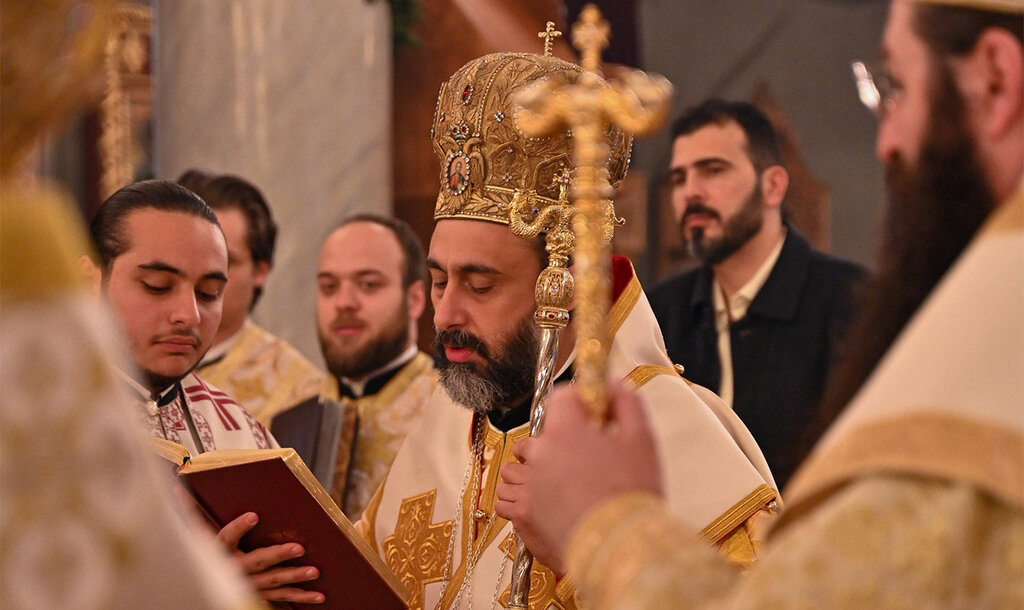
PHOTO Plovdiv Holy Diocese
“We were under Ottoman rule for 400 years, and then another 100 years under another form of oppression,” recalls Metropolitan Gregorios. “We believe that our Lord will not forget His children in this part of the world. We pray that they will be under His protection everywhere on earth and live in freedom. We pray for the people who remained in Syria and for those who left for whatever reasons. We try to tell them that wherever they go, they must carry Jesus Christ in their hearts. That is the only thing that can save them. We try to help everyone who wants to stay, but the difficulties are enormous. Not even the government could help them. We cannot tell young people ‘do not dream of a good life, do not dream of a good education’ when there are serious economic problems in the country and everything is falling apart - education, life, healthcare. And all these hardships stem from spiritual problems.”
Today, a significant part of the faithful in the modern Antiochian Church (around 5 out of 7.5 million Christians) belong to the Lebanese and Syrian diasporas in North and South America, formed during the mass emigration of Christians fleeing wars in the Middle East during the 20th century.
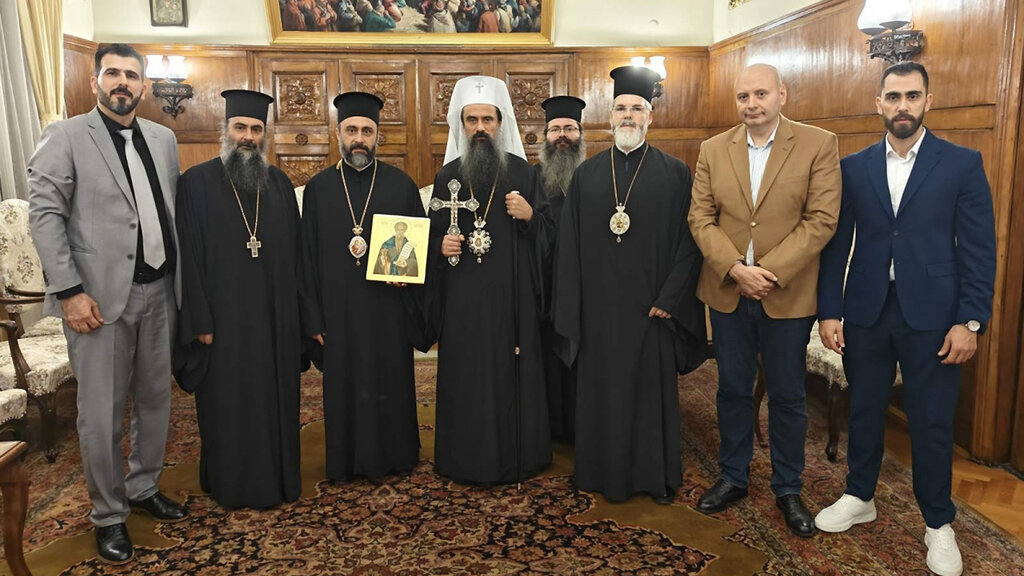
PHOTO bg-patriarshia.bg
“At present we have around 70,000 families in the Diocese of Homs, but unfortunately we cannot multiply this number by three or four. In most cases they consist of only two members, because many young people have emigrated and only the elderly, who are the vast majority, remain. And this is one of our greatest challenges,” Metropolitan Gregorios shares with sorrow.
Because of being well aware of the challenges faced by his spiritual children living far from their homeland, the Antiochian Church takes a favorable and understanding view of the Orthodox communities within its territory - among them the communities of Greek, Romanian, Serbian and Russian Orthodox Christians.
“I appreciate the desire and faith of Bulgarians to gather and confess their faith in the church, led by the good intentions of His Excellency the Ambassador to the UAE, with the blessing of His Holiness Patriarch Daniil of Bulgaria and through the steady actions of His Eminence Metropolitan Anthony of Western and Central Europe. It is a great joy to have among us our brothers and sisters of other nationalities professing the faith in another language. With the blessing of His Beatitude Patriarch John X, we try to present ourselves as an open home for every Orthodox Christian from any corner of the world.”
To be continued…
English version: R. Petkova
This publication was created by: Rositsa Petkova