Radio Bulgaria


Friday 12 December 2025 14:37
Friday, 12 December 2025, 14:37
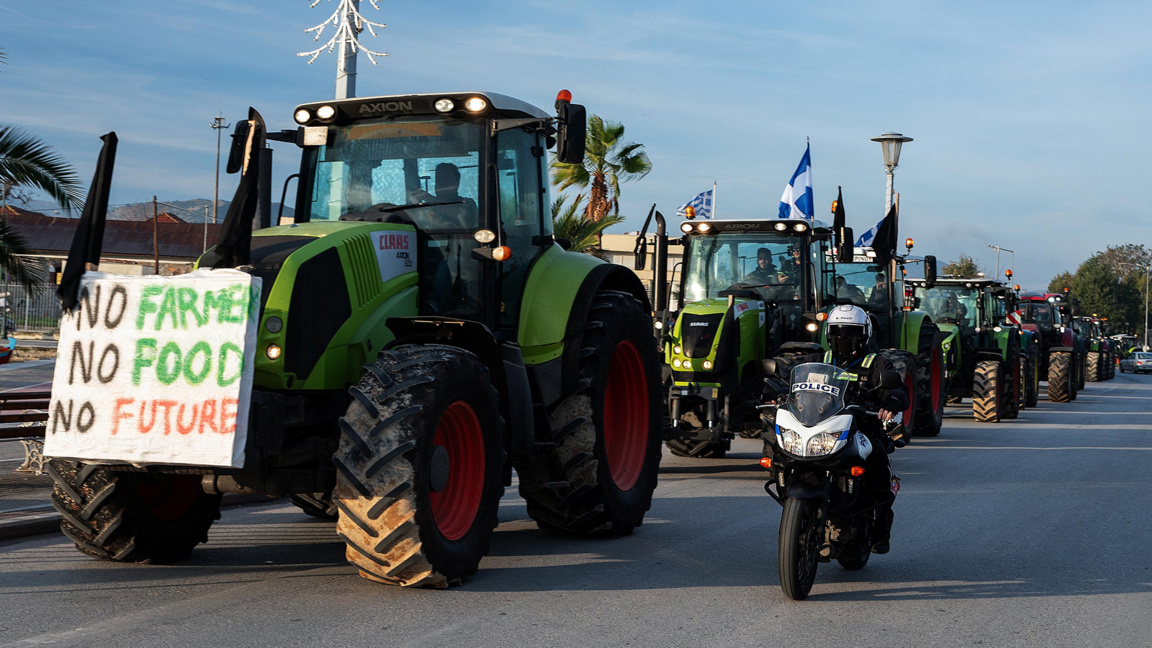
PHOTO EPA/BGNES
Font size
Farmers' road blockades continue in Greece
Greek farmers are
continuing their mass protests that began on November 30. They
blocked key roads in the country with agricultural machinery,
including ports and even state borders with Bulgaria, North Macedonia
and Turkey. In an attempt to stop the blockades, the police used tear
gas against the protesters, but to no avail. Negotiations between the
protesters and Agriculture Minister Konstantinos Tsiaras followed, at which
no agreement was reached. A meeting between the protest leaders and
Prime Minister Kyriakos Mitsotakis is planned for next week, BNR
correspondent Katya Peeva has reported.
Students, construction workers, teachers, pensioners are also joining the farmers in the blockades. In many places farmers are handing out their produce to waiting drivers. The impression is that all of Greece supports the protest, opposition MPs who met with the farmers said. The reason for the dissatisfaction is the delay in the payment of agricultural subsidies due to an investigation into a scandal involving the illegal distribution of EU funds for agriculture.
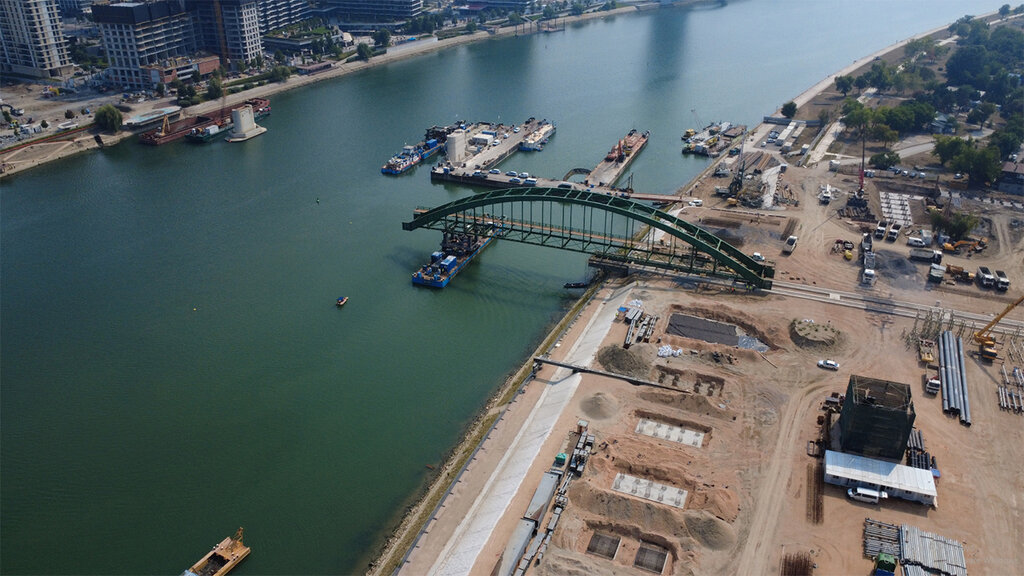
PHOTO nova.rs
Chinese companies are building a new bridge over the Sava River in
Belgrade
Chinese companies
are working on the construction of a new bridge over the Sava River
in Belgrade, but important information about the contracts, the selection
of a contractor and the terms of the project remains unavailable to
the public, BGNES writes. The new facility is being built on the site
of a steel bridge from 1942, which was dismantled in July. Parts of
the new structure are being manufactured at a plant run by
state-owned China State Construction Engineering. According to
Serbian Minister of Finance, Siniša Mali, the bridge should be
completed by the end of 2026.
The project is the
latest one in Serbia to be entrusted to Chinese companies based on an
intergovernmental agreement between Belgrade and Beijing. The
contractor is the Chinese state-owned corporation PowerChina, which
is also involved in other large infrastructure projects in Serbia.
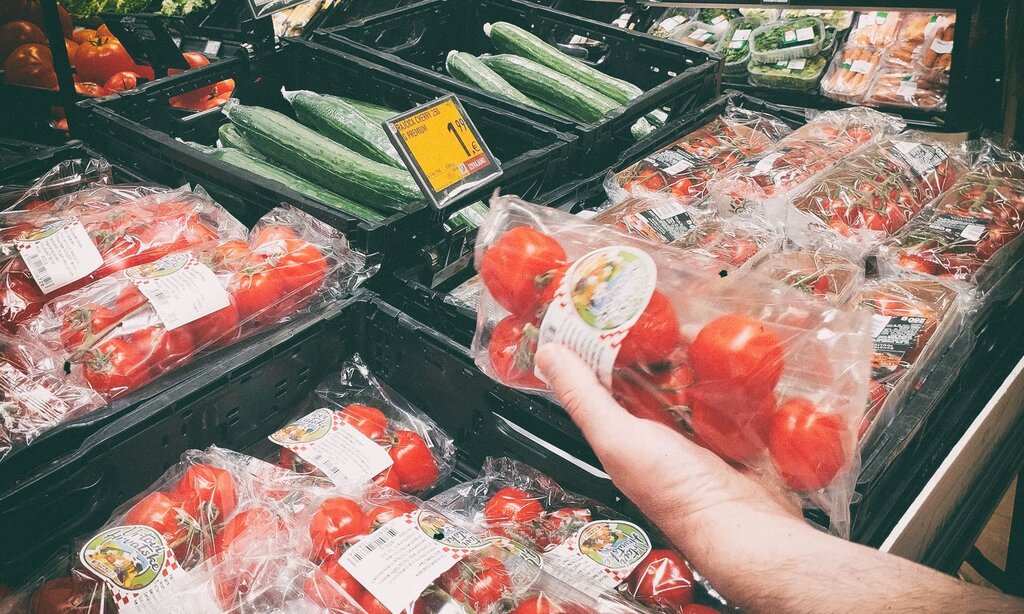
PHOTO koliko.hr
The basic family consumer basket in Croatia is 486 euros
In November 2025,
the basic basket of food and hygiene products for a family of four in
Croatia reached an average of 486.07 euros, or 2.51 euros more in
comparison to October, according to the monthly survey by the price
comparison portal koliko.hr, conducted in cooperation with the
Croatian Association for Consumer Protection. The basic basket
contains 51 items and covers modest but balanced monthly needs of a
household.
The portal has also
calculated the price of a standard basket, which includes a wider
selection of food and hygiene products (77 in total) and reflects the
actual consumption habits of Croatian families. In November, its
price reached 721.34 euros for a family of four. The president of the
Croatian Association for Consumer Protection, Ana Knežević, points
out that the situation of single pensioners is the most complicated.
They can afford to buy only half of the standard basket for one
person.
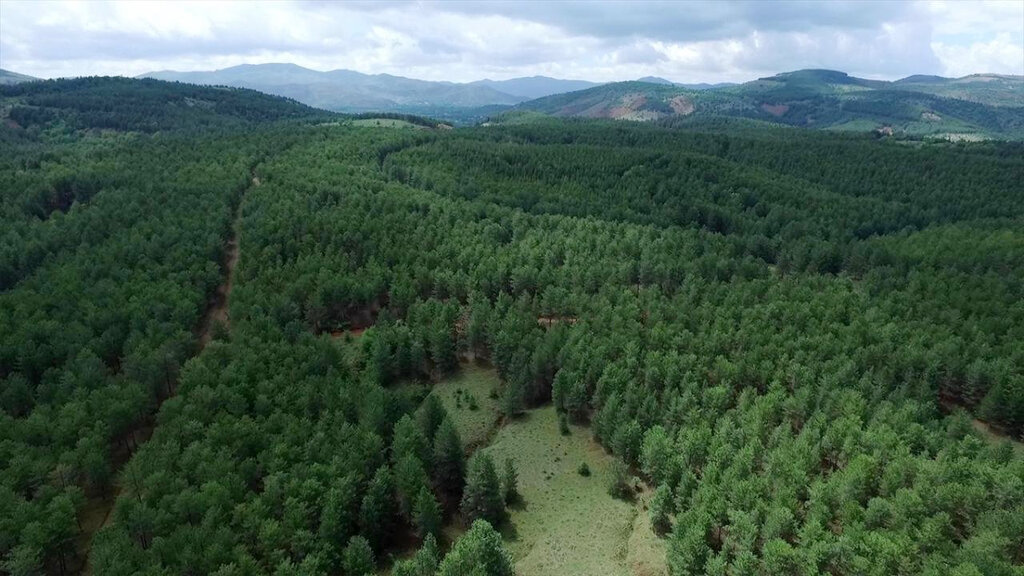
PHOTO anews.com.tr
Türkiye ranks first in Europe in terms of
expanding its forest area
According to a
report by the Food and Agriculture Organization of the United
Nations, forests cover 32% of the Earth's land area. The largest area
of forests is in South America, where the Amazon rainforest is
located. Among countries, Turkey ranks fourth in the world and first
in Europe in terms of expanding its forest area over the past 10
years, Anadolu Agency has reported. The country is expanding its
forest area by 118 thousand hectares (0.5%) annually.

PHOTO gov.cy
Cyprus' traditional wine Commandaria secures UNESCO heritage status
Commandaria wine has been
included in the UNESCO List of Intangible Cultural Heritage, the
website of the Cypriot government announced. The decision was made
during the 20th session of the Intergovernmental Committee for the
Safeguarding of the Intangible Cultural Heritage, held in Delhi,
India.
Deputy Minister of
Culture of Cyprus Vasiliki Kassianidou said that this is an important
decision for Cyprus, for its culture, as well as for the villages
producing the wine. She pointed out the dedication of the winegrowers
from the 14 villages producing "Commandaria" to uphold the
centuries-old tradition passed down from generation to generation.
Cyprus has seven
elements in the UNESCO List of Intangible Cultural Heritage:
Lefkaritika lace (2009), Tsiattista folk songs (2011), the
Mediterranean diet (2013), dry-stone walling (2018), Byzantine
chanting (2019), midwifery (2023), and Commandaria (2025).
Compiled by: Miglena
Ivanova