Radio Bulgaria


Author
Tsvetana Toncheva
News
Highlights of Bulgarian musical culture
“Belated encounters” by Petar Stupel – the delicate author of evergreens
Friday 16 January 2026 20:00
Friday, 16 January 2026, 20:00
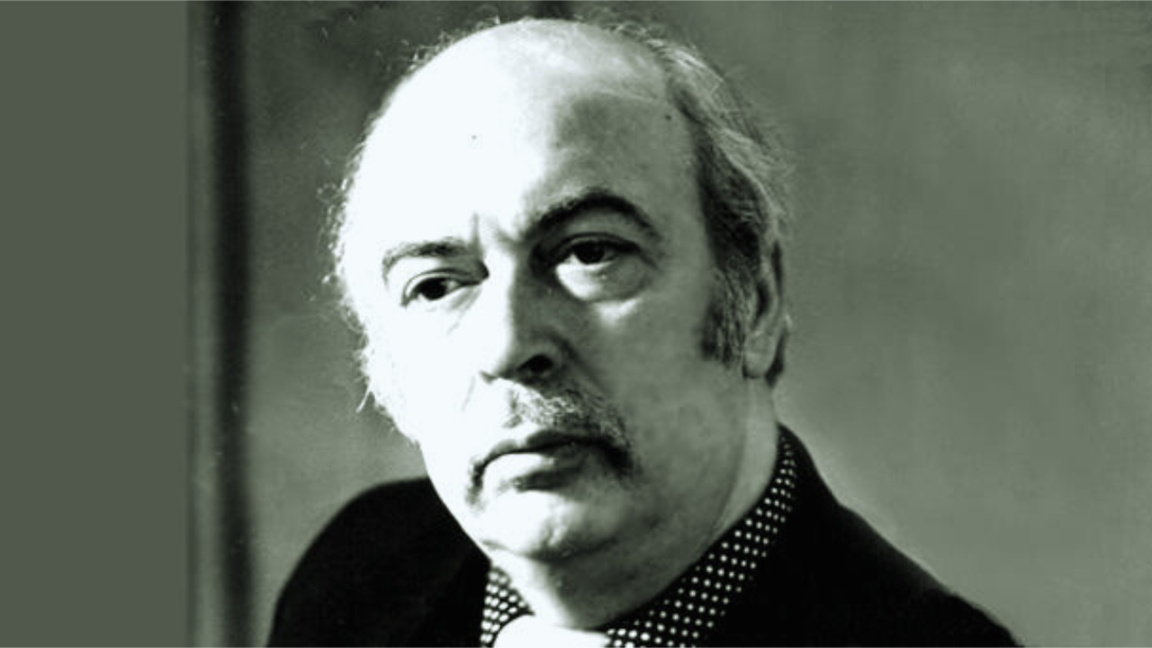
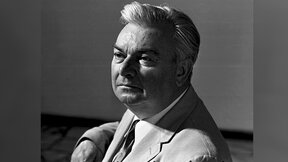
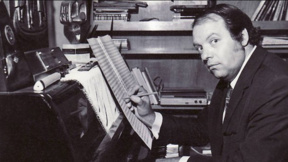
Composer Petar Stupel (1923-1997)
PHOTO ubc-bg.com
Font size
“He has an incredible instinct - he will always come up with a theme, a song that becomes the ‘emblem’ of a film, and people recognize him by it,” says film director Nedelcho Chernev - known as the “father of the Bulgarian television series” - about the composer Petar Stupel.
For Bulgarian children’s songs, this composer is something like the Patriarch of Bulgarian literature Ivan Vazov, believes the renowned poet, playwright, and writer Stefan Tsanev: “Surely all children who learn their first poem, Az sam balgarche (‘I Am a Bulgarian child’ by Ivan Vazov), and sing their first nursery rhyme, Zaichentseto Byalo (‘The Little White Bunny’), think they were written by the same author. Only a very good person can create such songs. And he is an incredibly good person…”
Bulgarian composer Petar Stupel (1923–1997) was indeed a good person and a talented artist. The author of the children’s hits “The Little White Bunny” and “Good Night, Children” (also known as “Az sam Sancho” with which television bedtime segments for children began every evening for decades) was born in Sofia in 1923 into a family of professional musicians - immigrants from Lithuania. The Revolution and the First World War scattered the descendants of the Jewish family across the world, but regardless of where they lived, almost all of them were musicians.
In the Bulgarian capital, Petar Stupel received his secondary education at the French lycée. His first piano teacher was the well-known Mara Balsamova. At just 13, he gave his first concert. He studied harmony with Asen Karastoyanov. In 1947, he graduated from the Music Academy, majoring in piano in the class of Prof. Andrey Stoyanov. While still a student, his compositional talent was noticed by Bulgarian composer Pancho Vladigerov.
Two years later, Stupel left for Budapest, where he specialized in composition and chamber music at the Franz Liszt Academy of Music with the world-renowned artists Leó Weiner and Pál Kadosa.
He began his career in Bulgaria as a music editor at the Children’s Department of the Bulgarian National Radio. He was a composer for the Song and Dance Ensemble of the Bulgarian Army, a music editor at the recording company Balkanton, and chief editor at the Bulgarian National Television.
The author of more than 100 children’s songs, a children’s opera, ballets, operettas, musicals, theater and film music, Stupel’s contribution to Bulgarian pop music is exceptional. His hit songs to verses by young poets date back to the 1940s, but his lyrical songs created in the following decades remain benchmarks of national art.
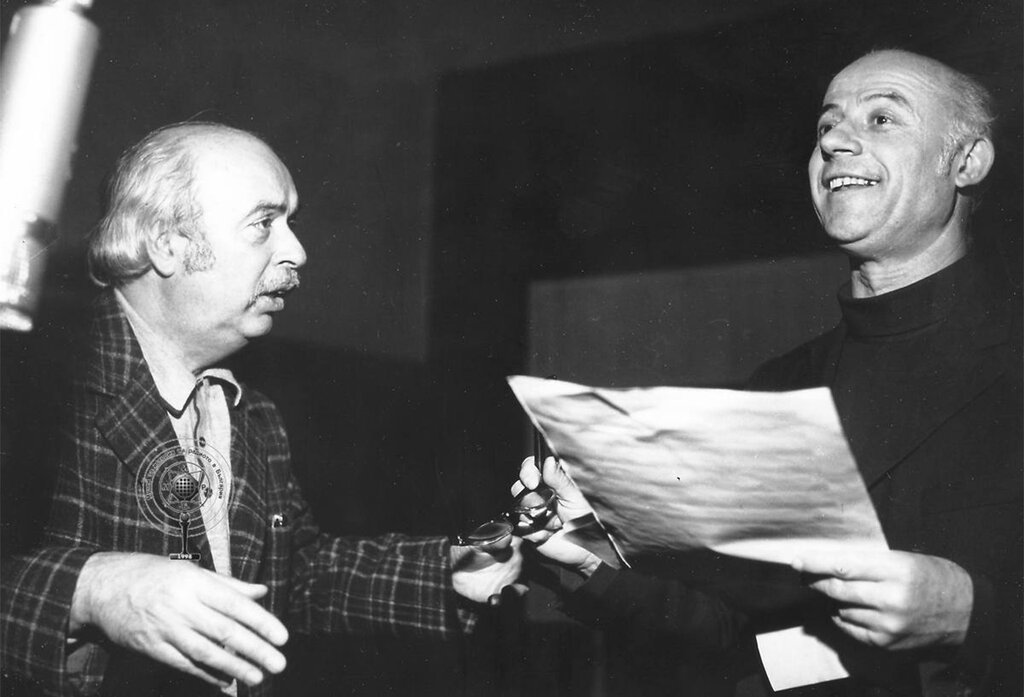
Petar Stupel and actor Emil Stefanov recording the children's programme "Barborino" on the Bulgarian National Radio
PHOTO Museum of the History of Radio in Bulgaria "Prof. Dr. Veselin Dimitrov"
In 1980, Petar Stupel became director of the International Festival Sofia Music Weeks. Under his leadership, the festival turned into a renowned European music event. Thanks to him, orchestras such as the Berlin and Vienna Philharmonics, opera and ballet companies from Italy, France, Great Britain, and Sweden, conductors of world stature like Claudio Abbado, and celebrated soloists of the caliber of José Carreras, Mirella Freni, Henryk Szeryng, Leonid Kogan, Sviatoslav Richter, Alexis Weissenberg, as well as famous European chamber ensembles, visited Sofia.
For nearly two decades, Petar Stupel invested his own authority and energy in Bulgaria’s most representative music festival. He continued to believe in it and support it even when many had completely written it off. And when Stupel and the festival ceased to be one and the same, the end came. On November 30, 1997, months after parting with his most beloved creation - Sofia Music Weeks - the composer passed away. Friends and colleagues note that as energetic and fiery as he was in realizing his festival ideas, so gentle, modest, and lyrical he was as a creator. Perhaps that is why a large part of his works have enjoyed the fortunate fate of becoming evergreens.
Even today, many Bulgarians fondly recall his songs such as “Zamalchi, zamalchi” (Be quiet, Be quiet) to verses by Veselin Hanchev from the film Lyubimets 13 (Favorite No. 13) or “Veselina” with lyrics by Radoy Ralin, performed by the iconic rock band Shturcite (The Crickets).
Petar Stupel is the author of the first Bulgarian film musicals - “The Ancient Coin” (1965) and “My Father the Painter” (1974), starring the celebrated actors Kosta Tsonev and Nevena Kokanova. From the mid-1950s to the early 1990s, he composed the scores for many beloved films such as “Two Victories,” “Favorite No. 13,” “Be Happy, Ani,” “A Specialist in Everything,” “Two Diopters of Farsightedness,” “The Five from Moby Dick,” “Hedgehogs Are Born Without Spines,” “With Children at the Seaside,” and “Fathers and Sons.”
The music for the hit television series “At Every Kilometer” and “Captain Petko Voyvoda,” written jointly with Atanas Boyadzhiev, turned the two authors into celebrities.
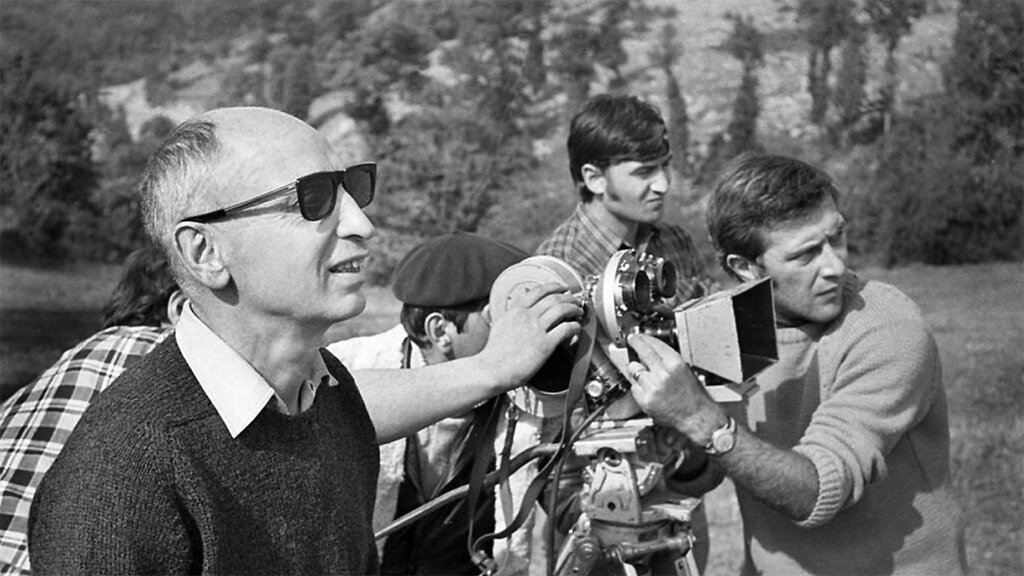
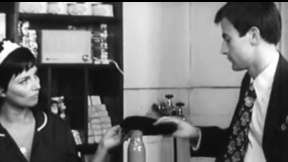
Film director Grisha Ostrovski
PHOTO natfiz.bg
About Petar Stupel, the great Bulgarian theater and film director and pedagogue Grisha Ostrovski shared: “I don’t know whether he gave something to me or I to him, but we ‘matched’ so perfectly as composer and director that when I have to work with someone else, I involuntarily compare them to Petyo and say to myself - oh, how easily Petyo could do this! In an instant, he can change the mood of the stage, transport you with a few bars written à la… inFrance or Hungary, to the 17th century or to the time of rock music. That is an incredible dexterity, equal to his talent!”
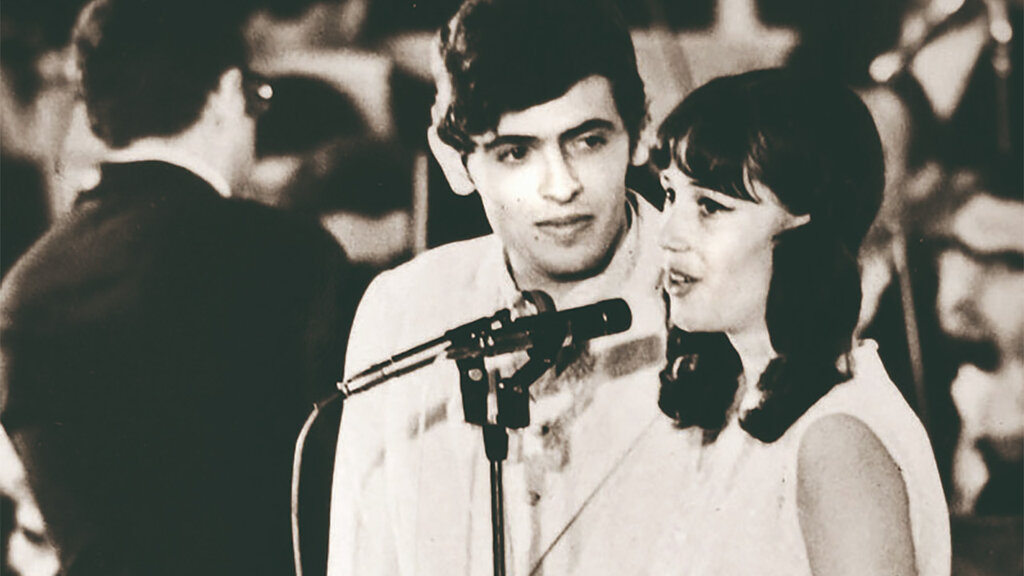
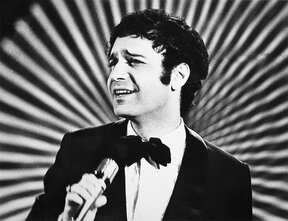
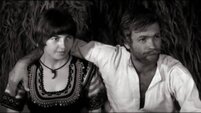
Maria Neykova and Michail Belchev
PHOTO Archive
In 1969, the song by Petar Stupel and Petar Karaangov, “Belated Encounters,” from Ostrovski’s film “Men on a Business Trip,” which premiered the previous year - 1968 - won first prize for a Bulgarian song at the prestigious international festival Golden Orpheus. It was sung by the young stars of the Bulgarian music scene Maria Neykova and Mihail Belchev. For the film’s soundtrack, however, the song was recorded by Maria Neykova together with the now-legendary pop and rock performer Georgi Minchev.
Read also:
Angel Zaberski’s “Moonlight Sonata”
"People and Streets” from the cult Bulgarian classic "The Boy Goes Away"
English version: R. Petkova
This publication was created by: Rositsa Petkova