Radio Bulgaria


Author
Yoan Kolev
News
Radio Bulgaria turns 90
Legendary actor Djoko Rosic devoted 17 years to Radio Bulgaria
Saturday 24 January 2026 07:08
Saturday, 24 January 2026, 07:08
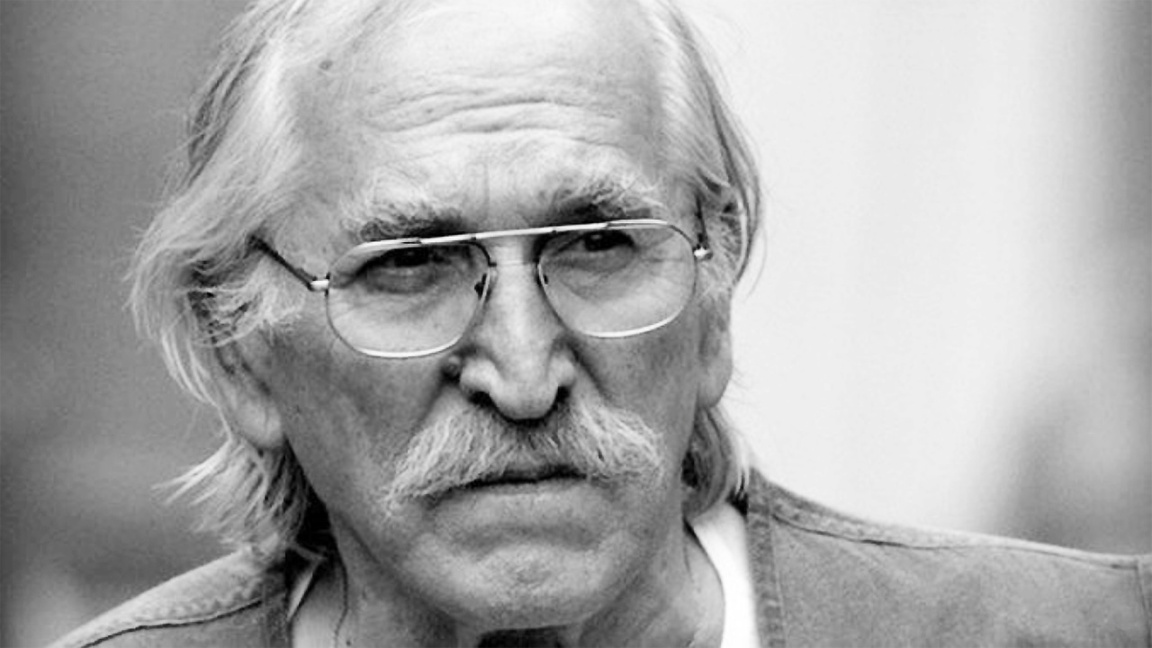
PHOTO BNR Archive
Font size
One of the most recognisable and unforgettable voices on the Bulgarian airwaves is inextricably linked to the history of Bulgarian National Radio (BNR). Djoko Rosic (1932–2014), an actor of Bulgarian-Serbian origin, remains an iconic figure in Bulgarian cinema, with more than 110 memorable roles in feature films.
Less widely known, however, is his long-standing contribution to radio. Rosic was a key member of Radio Bulgaria’s team, working for the foreign-language programmes of Bulgarian National Radio (BNR) for 17 years.
His life is rich in curious details, some of which seem almost to foreshadow his destiny.
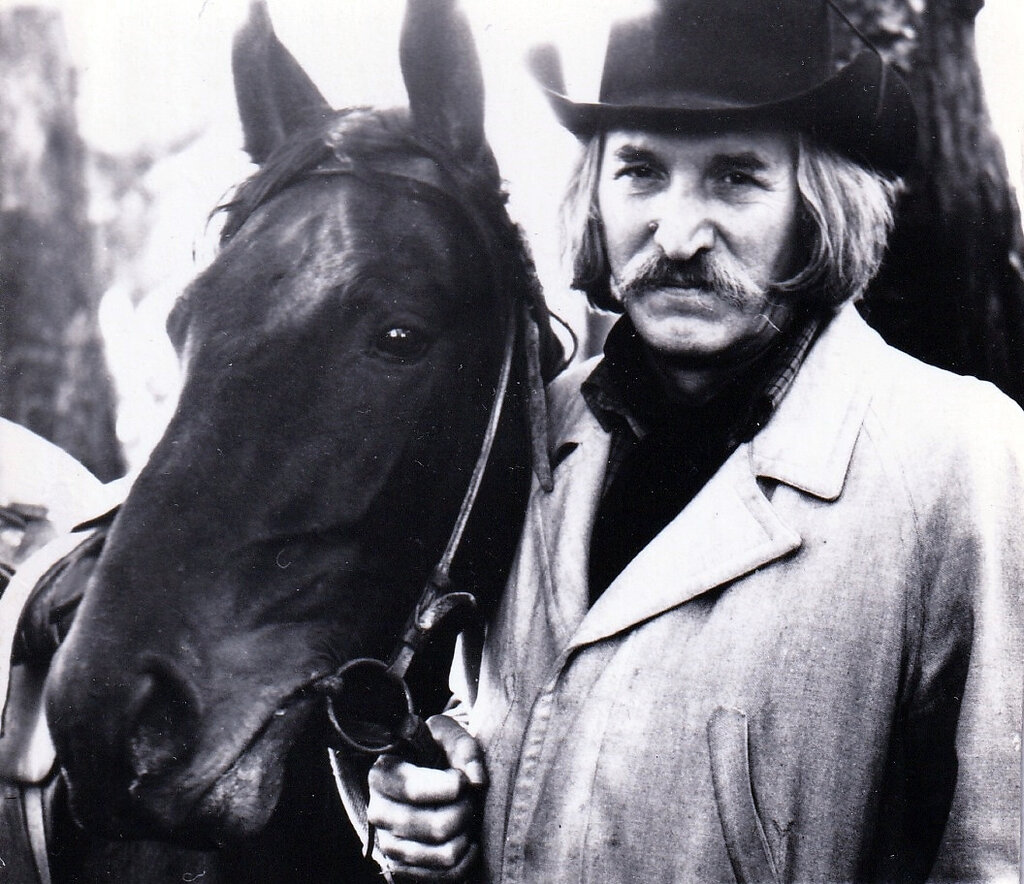
PHOTO Facebook/djokorositch
Rosic was born on 29 February 1932 — a leap year that also saw the Summer Olympic Games in Los Angeles and the Winter Games in Lake Placid. From an early age, he confidently told those around him that he would become a journalist. Unlike many childhood ambitions, this one came true. While studying economics at the Karl Marx Higher Institute of Economics (now the University of National and World Economy), he joined the editorial team of BNR’s Foreign Broadcasts department — the predecessor of today’s Radio Bulgaria.
‘I joined the Radio when I was nineteen and a half,’ Rosic recalls in a 2002 interview preserved in Bulgarian National Radio’s Golden Fund. ‘For quite some time, I worked as a translator and announcer on programmes for Yugoslavia. Later, I became an editor in the Central Editorial Office, which produced content in all the languages we broadcast.’
He adds that the Foreign Broadcasts department was staffed with exceptionally capable people. ‘Only those with a perfect command of languages could do the job — and they were intellectuals. That is why many dissidents later emerged from Foreign Broadcasts. From today’s perspective, one might say that we were producing propaganda for a party or a regime, but I am not ashamed of a single line I wrote during that period.’
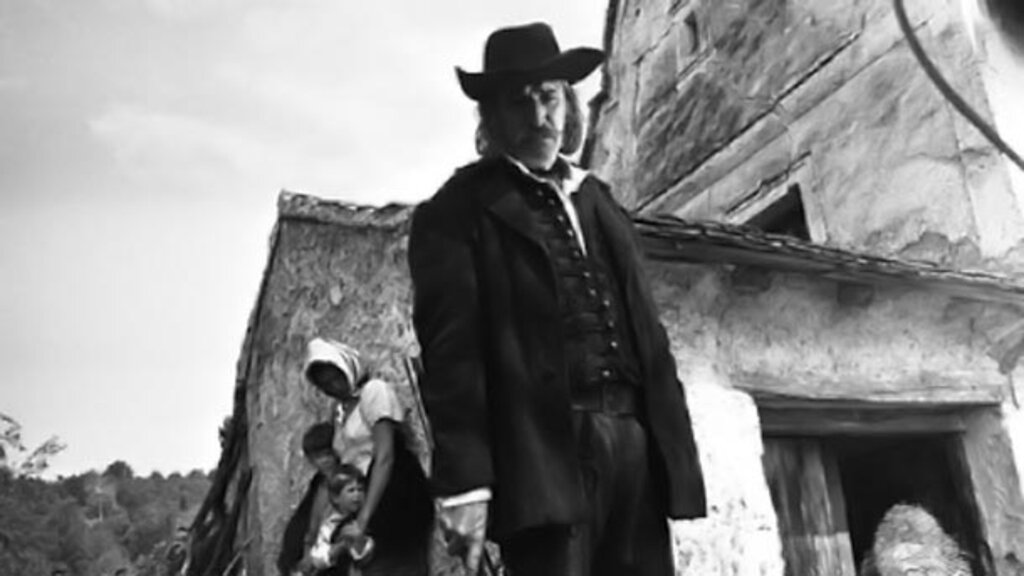
A still from the 1976 Hungarian Eastern film The Wind Blows Under Your Feet, starring Djoko Rosic.
PHOTO BNR
The actor would later say that the 17 years he spent in the Old House—as radio people affectionately call the building—were the happiest of his life. However, his reflections on that period are also tinged with bitterness.
‘In the autumn of 1968, after the events in Czechoslovakia — what were then officially described as a counter-revolution — a purge was carried out at the Radio,’ Rosic recalls. ‘At the time, I was a Yugoslav citizen. It was said that a foreign national could not work at the Radio, even though Foreign Broadcasts was full of foreign citizens. I assumed it would not apply to me because I was an exemplary employee. I do not remember the exact year, but in 1960 or 1961 I received the Radio’s annual award for the best piece of work.
‘Three months after I was dismissed, the same happened to my wife, Lilyana Lazarova, who worked in the Music Department of Foreign Broadcasts. Her only “offence” was that she was my wife.’
PHOTO archives.bnr.bg
His work at the radio gave Djoko Rosic’s film career an unexpected boost. At the time, the director, Misho Nikolov, encouraged him to accept an offer from Boyana Film Studio. The young actor took unpaid leave, shot his scenes, and then returned to the editorial office. In this way, he could have continued for decades—Rosic cared deeply for his work at the radio, had forged genuine friendships, and enjoyed the affection of his colleagues.
However, he was dismissed in the early 1970s following a meeting with the radio director, Rad Kamenski.
‘Those who dismissed us drew up a list of our names, which was circulated to all editorial boards,’ Rosic recalls. ‘After that, it was impossible to find a job in the media — as a journalist or in any other job. At the time, there were no films, and I survived for four years thanks to friends in the newspapers — they let me work as a proofreader for columns. Each column paid eight stotinki, and that’s how I managed until one day they offered me a position at the film studios.’
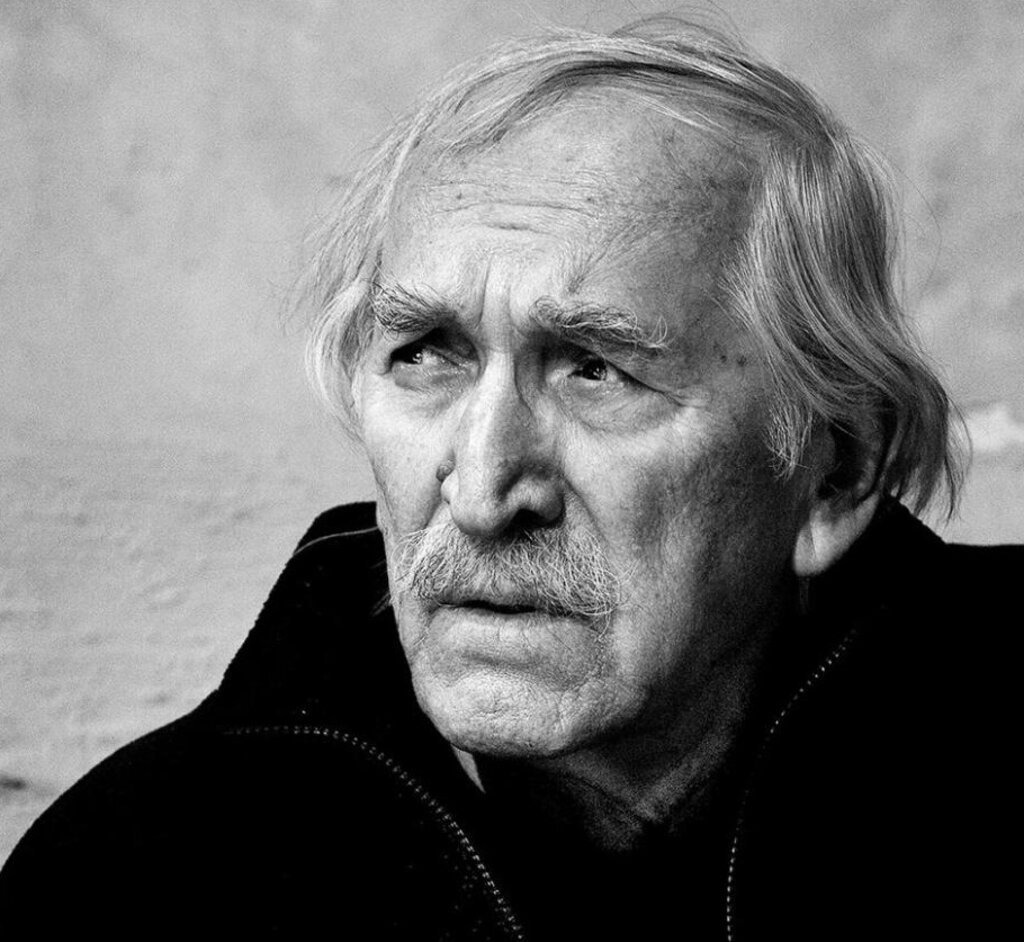
PHOTO Facebook/djokorositch
Even today, the Serbian-language section of Radio Bulgaria remembers Djoko Rosic’s spirited presence within the team.
‘He was extraordinarily colourful — in the way he spoke, in his overall presence, even in his posture and his cowboy-like appearance — tall, slightly stooped, always wearing his hat,’ recalls colleague Albena Dzhermanova, who had the chance to meet him.
The distinctive, deep, husky bass of Rosic’s voice lives on, years after his death on 21 February 2014, still resonating across the radio airwaves.
Editor: Elena Karkalanova
Posted in English by E. Radkova
This publication was created by: Elizabeth Radkova