Radio Bulgaria


Author
Tsvetana Toncheva
News
Highlights of Bulgarian musical culture
"Strahile, shtrashen voyvoda" – a song glorifying a fearsome Bulgarian rebel
Friday 30 January 2026 20:00
Friday, 30 January 2026, 20:00
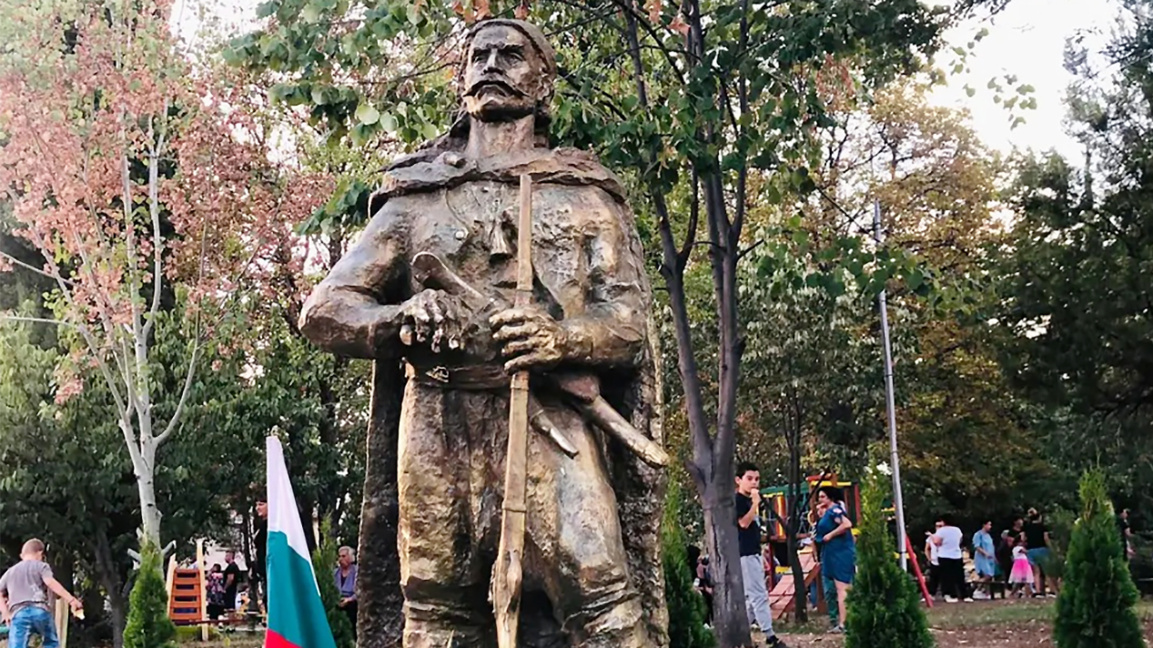
Monument to Stahil voyvoda in the town of Vetren
PHOTO pa1-media.bg
Font size
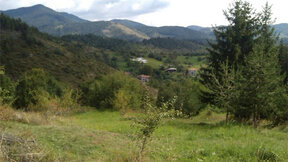
The legendary Strahil voyvoda is not only a captivating hero of Bulgarian folklore, but also a historical figure. He lived in the second half of the 17th century and, according to authoritative sources, was born in the village of Vetren - today a small town in the Pazardzhik region, located near the exit of the mountain pass known as “Trayanovi vrata” (Trajan’s Gate), where in antiquity a Roman road passed, connecting Western Europe with Constantinople.
For centuries, the inhabitants of Vetren enjoyed the status of what was known as “derventdzhii” - Christians in lands under Ottoman rule who had special duties to guard mountain passes from bandits and to ensure the passage of regular military units during campaigns. Organized in a military structure, armed and resolute, the derventdzhii enjoyed special privileges, and their leaders held the rank of pasha - a high title in the Ottoman Empire, equivalent in the army to that of a general or admiral.
Born among these brave men, Strahil did not wish to serve the empire. He rose up against the oppressors, organized an impressive armed band, attacked representatives of the authorities, and punished those who harassed the Bulgarian population. To his enemies he was terrifying not only because of his deeds, but also because of his appearance. It is no coincidence that in folk songs he is known as “Strahil - the fearsome voivode” - legend has it that he inspired fear with a single glance.
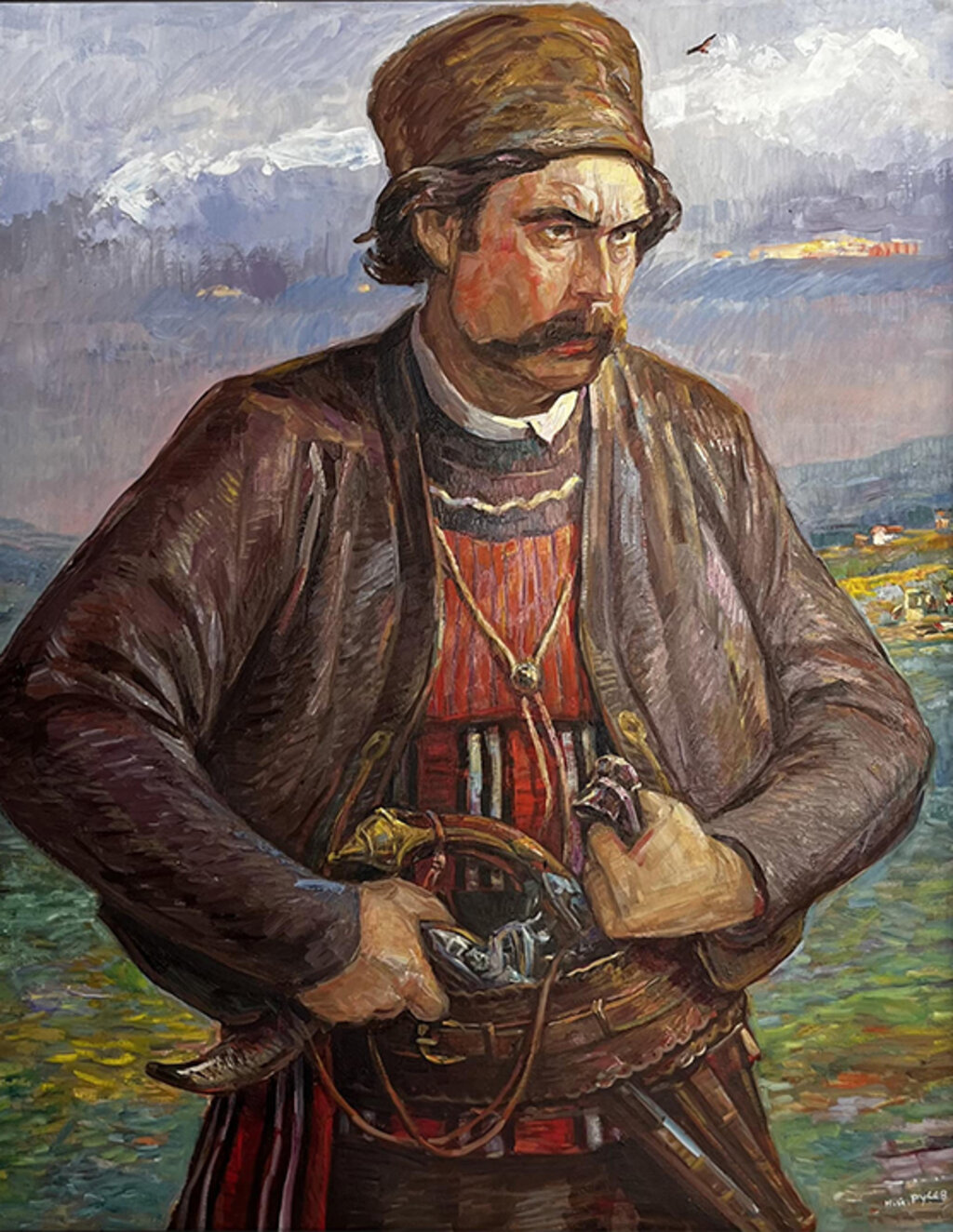
Strahil voyvoda - painter Nikolay Rusev
PHOTO Archive
Strahil joined the uprising led by the Bulgarian rebel Peter, known by the nickname Karposh. Standing at the head of a haiduk band in the Dospat region at the end of the 17th century, by 1689 Karposh had already gained fame as a renowned voyvoda and led the Bulgarians in the northern and northeastern parts of Macedonia into revolt against Ottoman rule during the Austro-Turkish War. The fact that Strahil joined Karposh earned him great authority among the Austrians, who regarded him as a representative of the rebelling Bulgarians with the rank of general in the Austrian army.
The prominent Ottoman court chronicler of the late 17th and early 18th centuries, Silyahdar, writes about him with undisguised hatred. According to the chronicler, Strahil “raised a banner” with 200 men and, “together with 4,000 Germans, Hungarians, and haiduks,” took part in the attack on Kyustendil in 1689 during the Great Turkish War, entering into battle with a large regular Ottoman army.
During the preparations for the Ottoman advance toward Niš, Strahil managed to leave the fortress and escape, but when the city was captured, his family was seized and sold into slavery. After the fall of Niš, his fate is unknown. Legend has it that he was captured and killed in Constantinople, but according to research, at the beginning of the 18th century he and his band settled in Strandzha Mountain.
His name is mentioned for the last time in 1711 during one of the Russo-Turkish wars, in connection with haiduk actions in the rear of the Ottoman army. It is assumed that Strahil died in the area of the village of Fakiya in Strandzha Mountain. Strahil’s standard-bearer was a haiduk nicknamed Atmadzhata - fearless like his leader and also celebrated in folk songs.
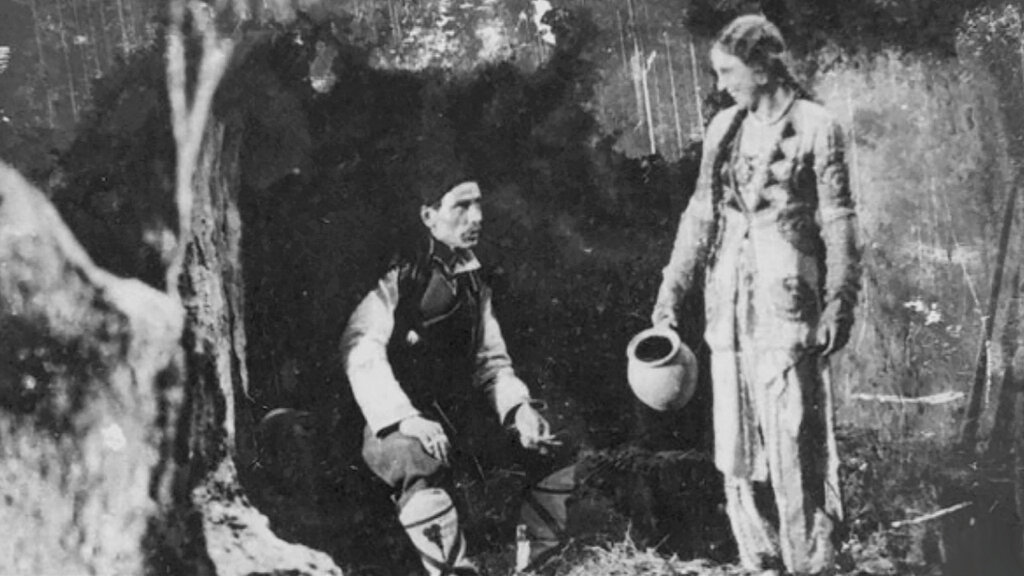
Scene from the film "Strahil voyvoda", 1938
PHOTO mubi.com
The most popular version of the song “Strahile, shtrashen voyvoda” (Strahil, you fearsome voivove) is a dialogue between Atmadzhata and Strahil. The voyvoda tells his standard-bearer about a heavy dream in which he saw many pursuers armed to the teeth. Atmadzhata reassures him - the very sight of Strahil is enough to make any enemy freeze with fear. In the finale, Strahil indeed finds himself face to face with a numerous enemy army and manages to kill its leader.
The most impressive interpretation of the song about the fearsome voyvoda Strahil is the arrangement by Stefan Mutafchiev for female soloist and folk choir, recorded by the great folk singer Valya Balkanska together with the singers of the Rodopa Folk Ensemble from the town of Smolyan.
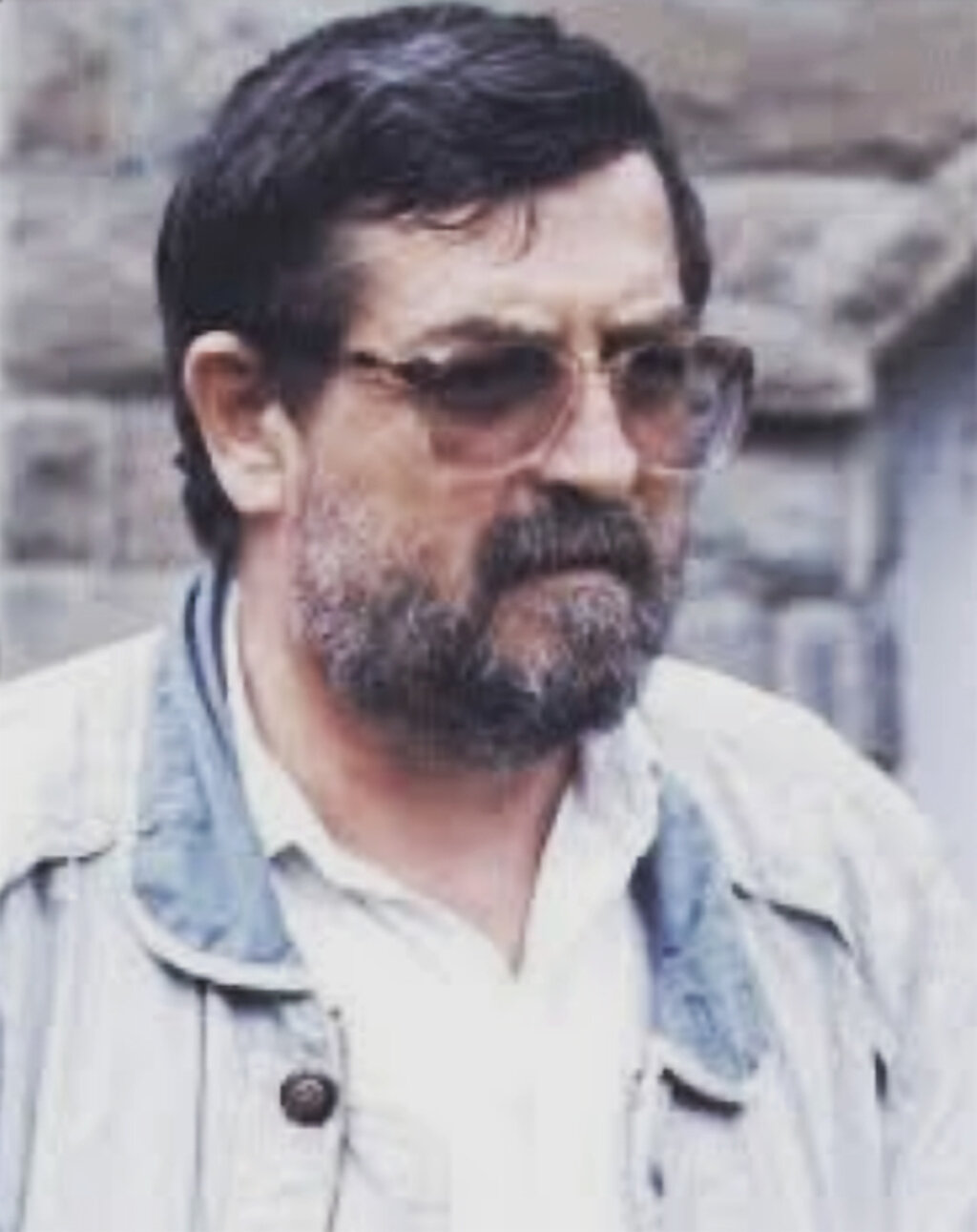
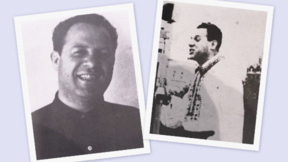
Stefan Mutafchiev (1942 – 1997)
PHOTO ubc-bg.com
Born in 1942, Stefan Mutafchiev graduated from the Music Academy in Sofia with a degree in composition under Prof. Veselin Stoyanov. The creation of the Trakia State Folk Ensemble in Plovdiv in 1974 gave the young musician the opportunity to demonstrate his undeniable talent as a choir conductor and as the author of a large part of the songs and dances in the ensemble’s first program.
To this day, his name is associated primarily with the “Trakia” folk ensemble, where he also served as chief artistic director. In the period from 1977 to 1984, Mutafchiev was a consultant to the “Rodopa” ensemble, and among the most outstanding works born of this collaboration, researchers without hesitation place the song “Strahile, strashen voyvoda” first.
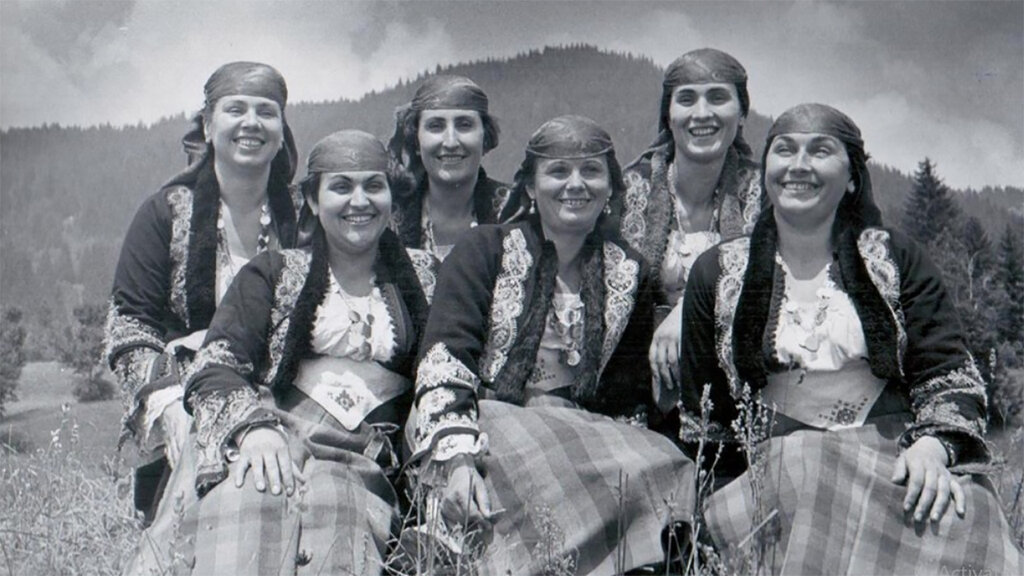
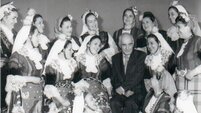
Valya Balkanska (first row, in the middle)
PHOTO rodopa-ensemble.com
The career of Valya Balkanska - one of the symbols of Bulgaria - began at the age of 18, with the first auditions for the newly formed folk ensemble in Smolyan. Her recording as soloist of the magnificent song about Strahil Voyvoda dates from 1979 - two years after her incomparable hit “Izlel e Delyo Haidutin,” included on the Golden Record aboard the Voyager 1, had begun its journey through space.
Explore the wealth of Bulgarian music with Radio Bulgaria's running series "Highlighs of Bulgarian Musical Culture":
“Prituri se planinata” – the jewel in Stefka Sabotinova’s repertoire
“Zableyalo mi agantse”: the folk song that melts every heart
English version: R. Petkova
This publication was created by: Rositsa Petkova