Radio Bulgaria


Author
Ivo Ivanov
The Rogozen Treasure: Forty years illuminating Thracian life
Monday 2 February 2026 17:54
Monday, 2 February 2026, 17:54
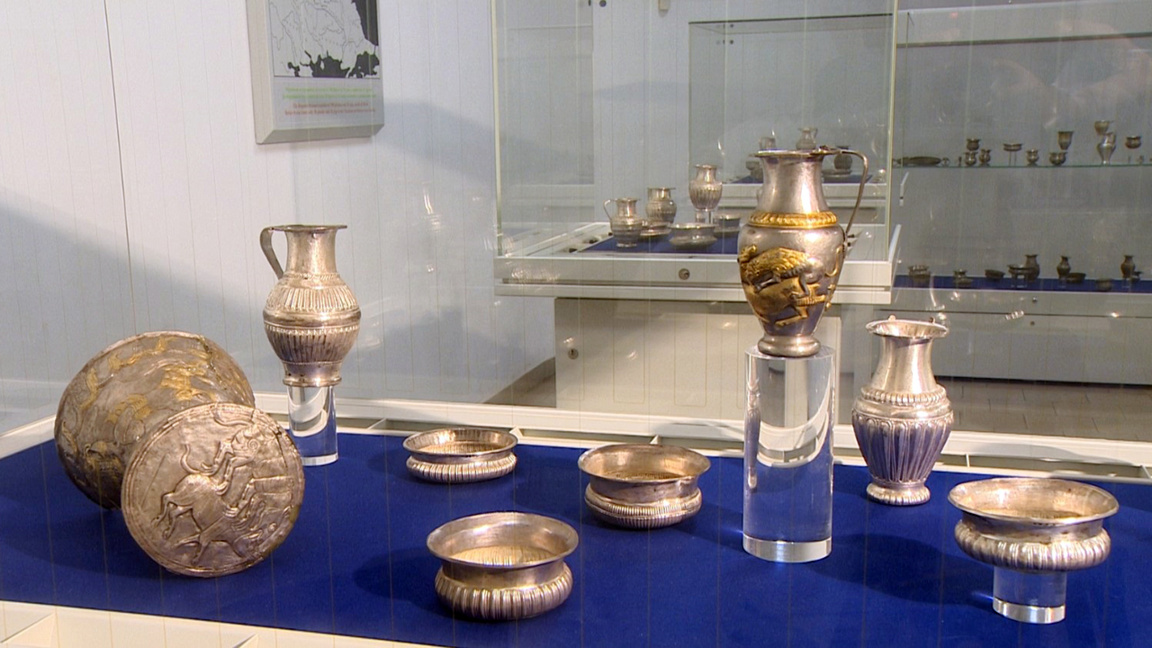
PHOTO Ivo Ivanov
Font size
The Rogozen Treasure is an essential component of any Bulgarian exhibition abroad dealing with the Thracians. Comprising 165 silver vessels, cups, and phials, some gilded, it is the largest collection of ancient Bulgarian artefacts. Many pieces are decorated with mythological scenes and stylised motifs.
While most Thracian treasures were discovered by chance, the Rogozen Treasure was uncovered in two stages: the first accidentally, and the second through the efforts of archaeologists from the Vratsa Museum in January 1986, as explained by Professor Nartsis Torbov from the University of Library Studies and Information Technologies.
In late 1985, a tractor driver from the village of Rogozen in north-western Bulgaria discovered a pile of 65 vessels while digging a canal to irrigate a private field. Initially thinking the vessels were church items, the villager, Ivan Dimitrov, eventually handed them over to the local municipal office.
"After New Year, three archaeologists came and told me they had seen 65 vessels in a crate at the municipal office," Professor Nartsis Torbov told Radio Bulgaria. *"The contribution of my colleagues from the Vratsa Museum was enormous, especially that of Bogdan Nikolov. Most importantly, they recalled another discovery: in 1925, in the region of Gladno Pole near Bukyovtsi (later known as Mizia), Alexander Vitanov had found vessels in his field. Years later, in 1935, he discovered a second batch almost in the same location.

Professor Nartsis Torbov
PHOTO Ivo Ivanov
When Nikolov and his colleagues saw the crate from Rogozen, they noticed that some of the vessels resembled those from the Mizia treasure. Naturally, they suspected there might be a second hoard, as had been the case in Mizia. Excavations began, and on 6 January, five metres northwest of the initial find, they uncovered a second hoard — 100 vessels piled together."*
Much speculation surrounds who buried the two caches of silver from the Rogozen Treasure and why. Scholars suggest the treasure may have been war booty, hidden during the retreat of the Macedonian king Philip II. In 339 BC, he was defeated by the local Thracian tribe of the Triballi and wounded in the leg. The treasure, looted during Philip II’s campaign in Thrace and northern Bulgaria, was then buried in the village of Rogozen.
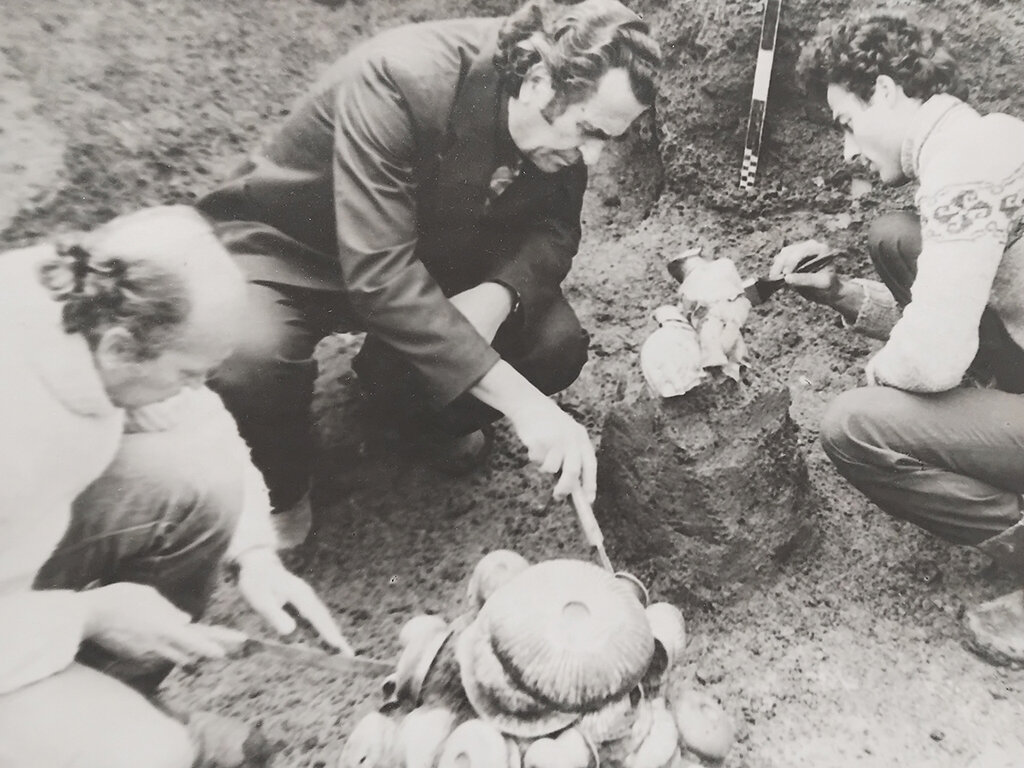
PHOTO Regional History Museum – Vratsa
'Another theory, which I find more convincing, is that the treasure belonged to a local ruler and was collected by his predecessors over generations to form a drinking set, most likely for wine.' This set would have been passed down from ruler to ruler," reflects Professor Nartsis Torbov.
The vessels date from different periods and many bear inscriptions indicating previous owners. This suggests that the set was accumulated over time and used during the Thracian rulers' ceremonial feasts.
Based on their craftsmanship and the mythological scenes depicted, the vessels in the Rogozen Treasure can be divided into two types. Some were crafted in the Hellenistic style by Greek artisans, as exemplified by the jewel-like phial depicting Heracles seducing the priestess Auge. Others were clearly made by local Thracian craftsmen. These are particularly fascinating because they depict Thracian mythology.
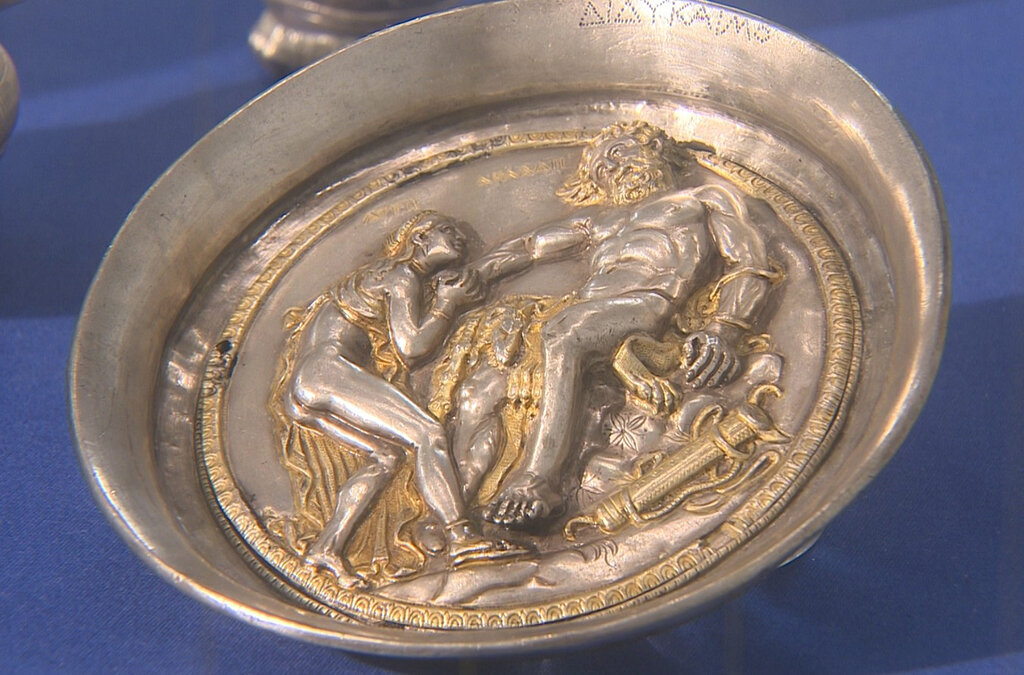
Heracles seducing the priestess Auge
PHOTO Ivo Ivanov
'These scenes provide invaluable insights because the Thracians had no written language. Until now, most of what we knew about their myths came from secondhand accounts of Greek travellers passing through Thracian lands, rather than direct observation. The Rogozen Treasure therefore offers rare, first-hand evidence of the Thracians' mythology and religious beliefs in north-western Bulgaria,' explains Professor Nartsis Torbov.
Scholars can only speculate about the meaning of these scenes.
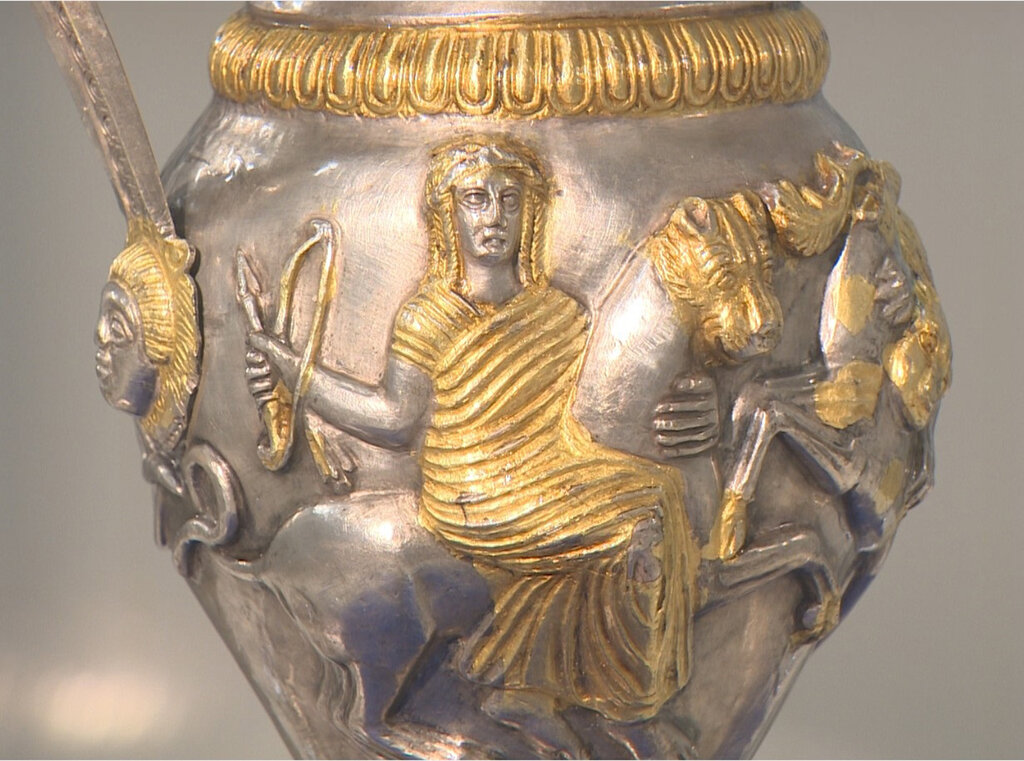
A Thracian goddess.
PHOTO Ivo Ivanov
'The challenge is that parts of the vessels have been damaged, particularly the large cup and one of the phials, which features an exceptionally detailed scene. This likely happened over time, as the vessels were made of relatively soft silver. It is impossible to fully reconstruct the freezes. However, this makes the Rogozen Treasure all the more fascinating, as it allows for a variety of interpretations of Thracian mythology that can continue to be explored and refined. I urge my colleagues to avoid extreme interpretations of these mythological depictions. The craftsmen who created these depictions were ordinary people with their own realistic views on religion and daily life. Misrepresenting this benefits no one," the researcher warns.
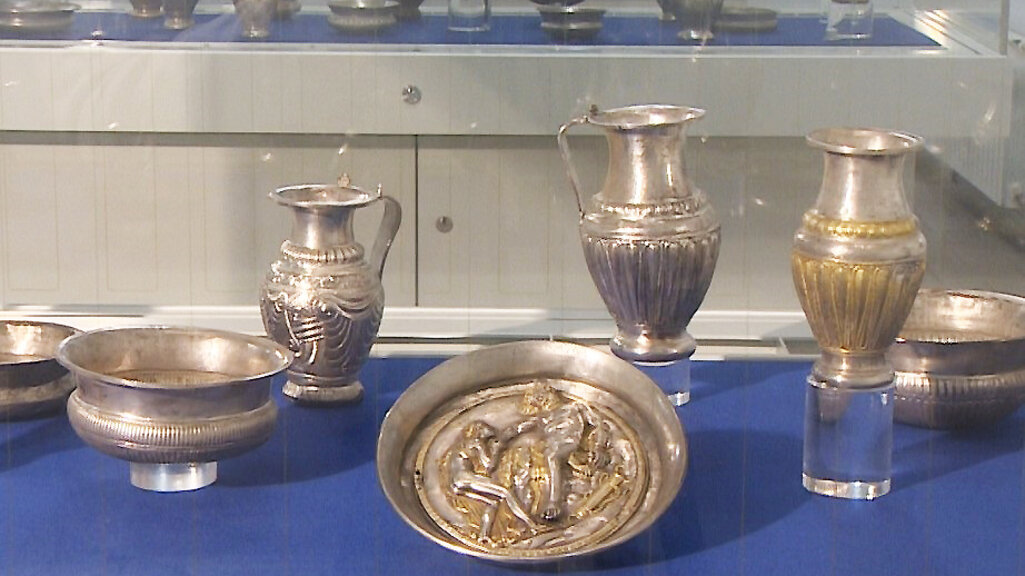
PHOTO Ivo Ivanov
Editor: Elena Karkalanova
Posted in English by E. Radkova
This publication was created by: Elizabeth Radkova