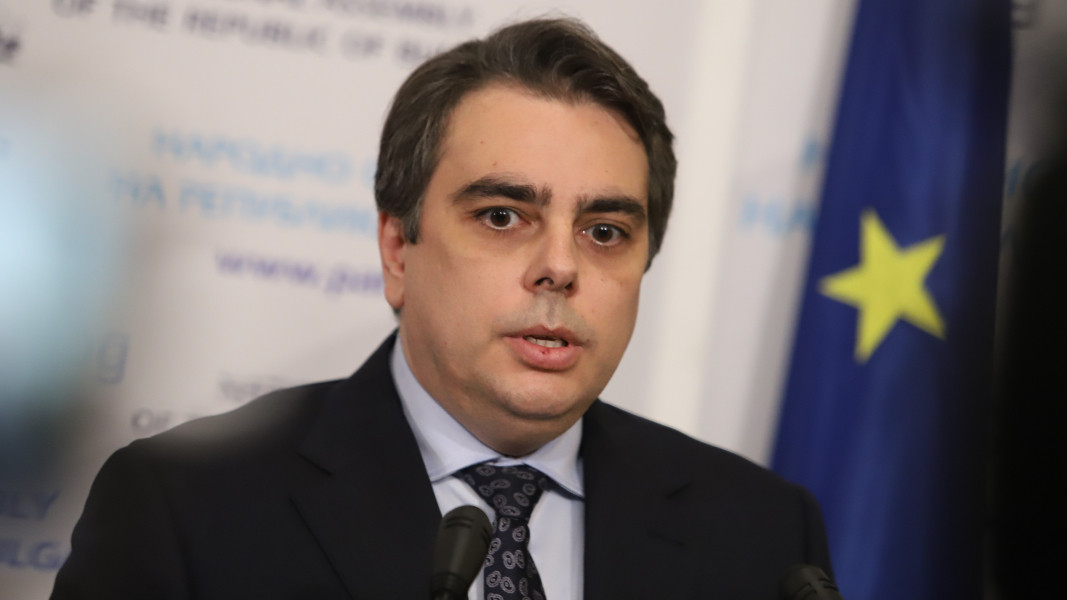
''The loss from Bulgaria's delayed membership in the Eurozone and Schengen is between 4% and 5% of the country's GDP'', Bulgaria’s Minister of Finance Assen Vassilev said in an interview for Nova TV. ''The business loses between EUR 250 million and EUR 500 million just from currency conversion. Separately, delaying eurozone membership leads to higher interest rates and less investment'', Minister Vassilev said.
The losses stemming from Bulgaria’s delayed membership in Schengen are also huge, Minister Vassilev said with regard to the government’s draft decree, according to which Bulgaria should include in an official document the date January 1, 2025, as a target date for adopting the euro. Assen Vassilev said that this act is necessary, because the caretaker cabinet had not written down the date January 1, 2024, as the target date for Eurozone membership, and because it had drafted a budget with a 6.4% deficit.

In 2025, the National Health Insurance Fund will be able to spend 1.2 billion leva (EUR 613 million) more on insured individuals, the draft budget of its Supervisory Board envisages. The health insurance contribution remains 8% of the insurable..
Bulgaria will meet the final criterion of price stability for entry into the eurozone by January. After that, politicians are in charge, Bulgarian National Bank Governor Dimitar Radev has told BNT. "Politicians must try to get the..
The Bulgarian banking system is among the most stable ones thanks to the high expertise of the people who work in it. They succeed despite turbulent times. They are successful because they follow the rules and laws. With these words,..





The National Assembly postponed the discussion and voting of the most important fiscal law of the land – the national budget for 2025 – for next year...
The overall business climate indicator in Bulgaria has increased in December by 1.7 points from 17 percent to 18.7% compared to November . An increase in..


 Partly Cloudy
 Clear
Clear Mostly Cloudy